
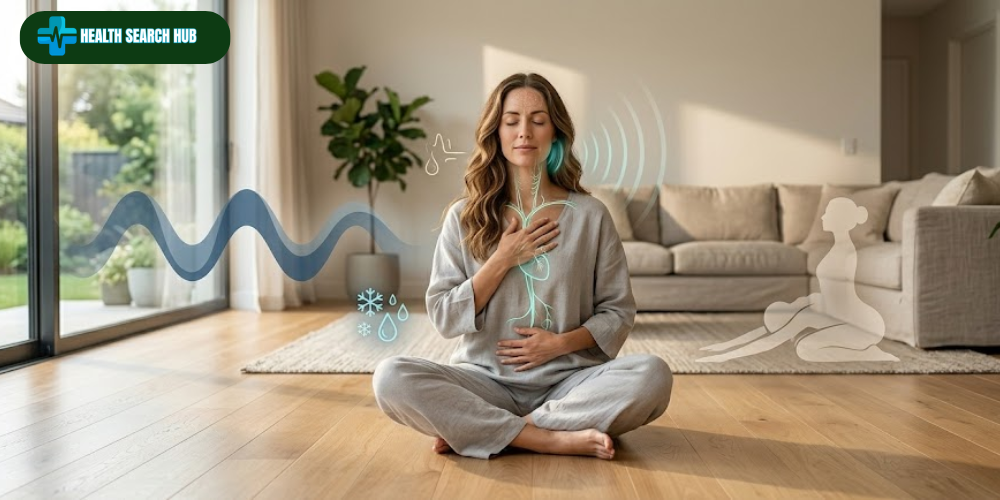
What are vagus nerve exercises, and why are so many people using simple breathing, humming, and cold water techniques to manage stress? The vagus nerve is the longest cranial nerve in your body. It runs from your brainstem through your neck, chest, and belly. It acts as the main link between your brain and your body, influencing everything from heart rate and digestion to mood and immune function. Learning to activate this nerve through daily habits may help you shift out of a stress response and into a calmer state.
What Is the Vagus Nerve and Why Does It Matter?
The vagus nerve is a key part of your parasympathetic nervous system, the branch responsible for rest, recovery, and relaxation. When this system is active, it slows your heart rate, supports digestion, and helps your body bounce back from stress.
The other side is the sympathetic nervous system, which triggers your fight-or-flight response when you sense danger. This raises your heart rate, tightens your muscles, and diverts energy from digestion. Both systems matter, but modern life keeps many people stuck in a state of chronic stress.
How Do Vagus Nerve Exercises Work?
These exercises work by activating the vagus nerve through specific actions that trigger your parasympathetic nervous system. When you stimulate the vagus nerve, you send signals to your brain that help shift your body from fight-or-flight to rest and recovery.
This has real, measurable effects. A 2025 study in the European Heart Journal found that just seven days of vagus nerve stimulation VNS improved peak oxygen uptake by four percent and cut markers of swelling in healthy people. Research from the University of Florida has also shown that activating the vagus nerve can reduce inflammation and support cardiovascular health. These findings show that the benefits go beyond just feeling relaxed.
Deep Breathing and the Extended Exhale
🌬 Deep Breathing
Deep breathing is one of the simplest ways to stimulate the vagus nerve. Take a slow, deep breath in through your nose, letting your belly expand, then breathe out slowly for a longer count than your inhale.
This pattern turns on the parasympathetic nervous system and slows your heart rate right away. Doing deep-breathing meditation for even 5 minutes a day can improve heart rate variability, a direct sign of better vagal tone. The key is the long exhale, because the vagus nerve is most active when you breathe out.
Cold Water and the Dive Reflex
❄ Cold Exposure
When you splash cold water on your face, you trigger what scientists call the dive reflex. This reflex activates the vagus nerve and quickly slows your heart rate, pulling you out of a stress response.
You do not need an ice bath. Simply splash cold water on your face for 15 to 30 seconds, aiming at your forehead and cheeks. You can also hold a cold pack on the side of your neck where the vagus nerve runs near the surface. Either way sends a strong signal to calm the body fast.
Humming, Chanting, and Gargling
🎶 Vocal Vibration
The vagus nerve passes through your throat, so vibrations in this area can directly stimulate it. Humming, chanting, singing, and gargling with water all create vibrations that activate the nerve.
Try humming at a low, steady pitch for two to three minutes. Many people notice a wave of calm spreading through their chest. This means the parasympathetic nervous system is kicking in. These techniques are simple, effective, and available anywhere.
Gentle Movement and Yoga
🧘 Mindful Movement
Slow, mindful movement practices like yoga and tai chi support nervous system balance. They combine controlled breathing with gentle stretching and awareness, creating ideal conditions for activating the vagus nerve.
A 2025 review in Frontiers in Psychology described the vagus nerve as a cornerstone for mental health, noting that practices combining breathwork and movement are among the best natural ways to boost vagal tone.
What the Science Supports and What Is Still Evolving
The link between vagus nerve exercises and better health is backed by a growing body of research. Studies confirm benefits including reduced inflammation, improved heart rate variability, lower resting heart rate, and stronger mood control.
But experts note that much of the research on natural vagus nerve exercises is still in its early stages. Clinical vagus nerve stimulation VNS devices have FDA approval for epilepsy and treatment-resistant depression, but the at-home exercises here rest more on emerging evidence than on large-scale trials. This does not mean the exercises lack value. It means you should treat them as one part of a broader approach to stress management.
Are These Exercises Right for You?
For most healthy adults, vagus nerve exercises are safe, free, and easy to add to a daily routine. Whether you start with a deep breath practice, splash cold water on your face during a tough moment, or hum for a few minutes before bed, these methods offer a practical way to support your nervous system.
The key is doing them regularly. Like any training, the benefits of nerve exercises build over time as your vagal tone strengthens and your body becomes better at shifting between the sympathetic and parasympathetic nervous systems.
✨ A Simple Step Toward Better Stress Management
The rise of vagus nerve exercises reflects a shift toward simple, science-backed habits that put you in control of your own well-being. You do not need costly devices or clinic visits to support the connection between your brain and body. A few minutes of deep breathing, cold water, or gentle movement each day can help your nervous system find balance and build strength over time.
Sources
- University of Florida College of Public Health: Does Vagus Nerve Stimulation Really Work?
- European Heart Journal, Oxford Academic: Non-Invasive Vagus Nerve Stimulation and Exercise Capacity in Healthy Volunteers
- Frontiers in Psychology: The Vagus Nerve: A Cornerstone for Mental Health and Performance Optimization