For decades, daily aspirin has been one of the most widely discussed strategies for preventing colorectal cancer. Millions of adults in the United States take low-dose aspirin with the belief that it can reduce their risk of developing one of the most common cancers in the country. That belief was supported by earlier observational studies and, for a time, by guidance from the United States Preventive Services Task Force USPSTF. But a major new review published in 2026 is challenging the foundation of aspirin colon cancer prevention, suggesting that the evidence behind this practice is far weaker and more uncertain than many people assume.
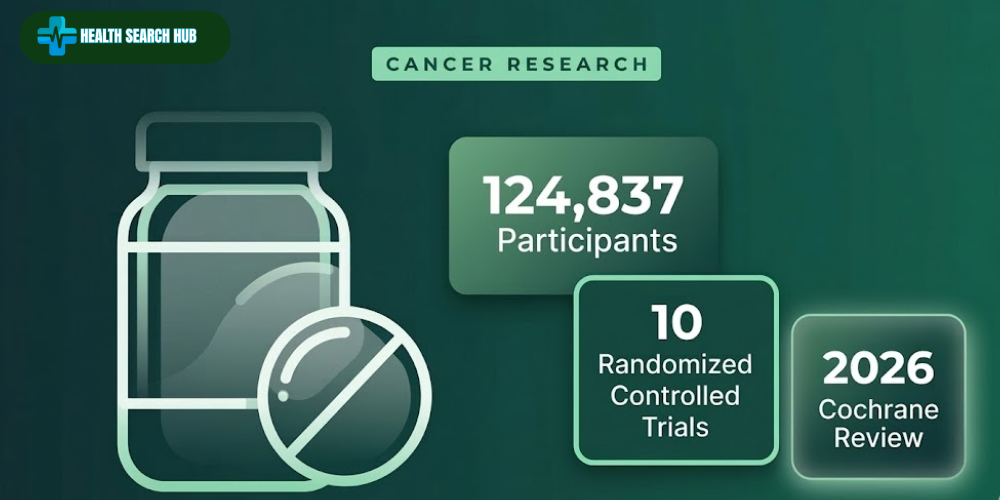
The review, conducted by researchers at West China Hospital of Sichuan University and published in the Cochrane Database of Systematic Reviews, analyzed 10 randomized controlled trials involving 124,837 participants. It is the most comprehensive assessment to date of whether aspirin and other nonsteroidal anti-inflammatory drug classes can prevent colorectal cancer CRC in individuals at average risk. The findings have significant implications for public health policy, clinical practice, and the millions of adults who currently take a daily aspirin in the hope of preventing cancer.
What the Cochrane Review Found
The central conclusion of the review is that aspirin probably does not reduce the number of new colorectal cancer cases during the first five to fifteen years of use. This is a critical timeframe because most clinical trials of aspirin for cancer prevention have followed participants for this duration. Within that window, the researchers found no meaningful reduction in colorectal cancer incidence among people at average risk.
The review acknowledged that after 15 or more years of use, there may be a reduction in colorectal cancer cases. However, the researchers emphasized that this long-term evidence is highly uncertain. The number of trials with follow-up data extending beyond fifteen years is small, and the confidence in those results is low. In practical terms, this means that any potential benefit of aspirin for preventing cancer may require an extraordinarily long commitment, and even then, the outcome is not guaranteed.
Beyond colorectal cancer itself, the review also examined whether aspirin could prevent colorectal adenomas, which are precancerous growths that can eventually develop into cancer. The evidence here was similarly inconclusive. While some studies suggested a modest reduction in adenoma recurrence among individuals with pre-existing adenomas, the effect of aspirin on preventing new adenomas in the general population remained unclear.
The History of Aspirin and Cancer Prevention
The idea that aspirin might help prevent colorectal cancer has a long history in medical research. Aspirin is classified as a nonsteroidal anti-inflammatory drug, and its anti-inflammatory properties have been studied extensively in the context of cancer biology. Chronic inflammation is known to play a role in the development of colorectal cancer, and researchers hypothesized that the regular use of an anti-inflammatory agent like aspirin could interrupt that process.
Early observational studies appeared to support this hypothesis. More than one large cohort study found that regular aspirin users had lower rates of colorectal cancer compared to non-users. These findings were compelling enough to influence clinical guidelines. In 2016, the United States Preventive Services Task Force (USPSTF) issued a landmark recommendation stating that adults aged 50 to 59 with a 10% or greater 10-year cardiovascular disease risk should consider taking low-dose aspirin for the dual benefit of heart disease and colorectal cancer prevention. It was one of the first times a major federal advisory body had recommended a medication specifically for preventing cancer.
However, the landscape shifted substantially. The USPSTF updated its guidance in 2022, and the recommendation to use aspirin for colorectal cancer prevention was removed. The revised guidelines focused aspirin recommendations solely on cardiovascular disease prevention, reflecting growing uncertainty about the strength of the evidence for cancer prevention. The National Cancer Institute has also noted that while some research suggests aspirin may reduce the risk of certain cancers, the evidence is not strong enough to recommend it as a preventive measure for the general population.
Why the Earlier Evidence May Have Been Misleading
Understanding why the earlier evidence appeared more promising requires distinguishing between observational studies and randomized controlled trials. Observational studies track large groups over time and look for patterns, but they cannot control for all variables that might influence outcomes. People who take daily aspirin may differ from non-users in ways that independently affect cancer risk, such as being more health-conscious or more likely to undergo screening.
Randomized controlled trials assign participants to treatment and placebo groups, minimizing confounding factors. The Cochrane review focused on this gold-standard evidence, and when limited to randomized data, the case for aspirin as a cancer prevention tool weakened considerably. The effect of aspirin on colorectal cancer risk may be smaller, slower to develop, or more dependent on individual factors than observational studies initially suggested.
The Risk of Side Effects
One of the most important findings of the Cochrane review concerns the side effects of long-term daily aspirin use. While aspirin probably does not affect the overall number of serious adverse events, it does increase the risk of specific and potentially dangerous complications.
The review found clear evidence that daily aspirin increases the risk of serious extracranial hemorrhage, which refers to bleeding that occurs outside the skull, typically in the gastrointestinal tract. Aspirin also probably increases the risk of hemorrhagic stroke, a type of bleeding that occurs in or around the brain. These are not trivial side effects. Gastrointestinal bleeding can be life-threatening, particularly in older adults, and hemorrhagic stroke carries a significant risk of permanent disability or death.
For individuals considering a high dose or even a standard low dose of aspirin for cancer prevention, these risks must be weighed carefully against the uncertain and possibly nonexistent benefit. The review authors emphasized that patients should not start taking aspirin for the purpose of preventing cancer without a thorough discussion with their healthcare provider about their personal bleeding risk.
What About People at Higher Risk?
It is important to note that the Cochrane review focused specifically on people at average risk of colorectal cancer. The findings do not necessarily apply to individuals who are at elevated risk due to genetic conditions such as Lynch syndrome, a personal history of colorectal adenomas, or a strong family history of colorectal cancer.

Separate research has shown that aspirin may offer meaningful benefits for certain high-risk subgroups. A randomized, placebo-controlled trial published in the New England Journal of Medicine in 2025 found that daily aspirin for 3 years reduced the risk of cancer recurrence in patients with stage I-III colorectal cancer who had specific PI3K pathway mutations. This is a significant finding, but it applies to a genetically defined subset of cancer patients, not to the general public.
The distinction between average- and high-risk populations is critical. The evidence supporting aspirin use in high-risk groups remains active and evolving, and some oncologists continue to recommend aspirin as part of a comprehensive treatment plan for select patients. But for the tens of millions of Americans without these specific risk factors, the case for daily aspirin as a cancer prevention strategy has grown considerably weaker.
What This Means for You
If you are currently taking daily aspirin with the expectation that it is preventing colon cancer, the findings suggest that the benefit may be far less certain than previously believed. This does not mean you should stop taking aspirin without consulting your doctor, particularly if it was prescribed for cardiovascular reasons. But if cancer prevention was the primary motivation, discuss with your healthcare provider whether the risks outweigh the uncertain benefits.
Colorectal cancer screening through colonoscopy and stool-based testing remains the most effective approach to early detection and prevention. Regular exercise, a fiber-rich diet, and maintaining a healthy weight have all been associated with reduced colorectal cancer risk and carry none of the bleeding risks associated with long-term aspirin use.
The Evolving Science of Cancer Prevention
The story of aspirin and colon cancer prevention is a reminder that medical science is not static. Recommendations change as evidence accumulates. The 2026 Cochrane review does not close the door on aspirin research, but it does make clear that for adults at average risk, the current evidence does not support taking daily aspirin solely to prevent colorectal cancer.
As research continues into the long-term effects of aspirin and its potential role in genetically defined populations, a more precise understanding of who might benefit will likely emerge. Until then, the best strategy remains evidence-based screening, healthy lifestyle choices, and individualized medical guidance.
✨ Positive Takeaway
While this review challenges a long-held assumption about aspirin and cancer prevention, it also reflects the strength of the scientific process. The willingness to revisit established beliefs and hold them to higher standards of evidence ultimately protects patients from unnecessary risk. For individuals at average risk, the most effective tools for preventing colorectal cancer, including screening, regular exercise, and a healthy diet, remain accessible, well-supported, and free of the bleeding risks associated with daily aspirin use. Science is becoming more precise, and that precision benefits everyone.
Sources
- Cochrane Library: Aspirin and NSAIDs for Preventing Colorectal Cancer
- ScienceDaily: Millions Take Aspirin to Prevent Colon Cancer — Major Review Says Don’t Count on It
- New England Journal of Medicine: Aspirin for PI3K-Altered Colorectal Cancer
- USPSTF: Final Recommendation — Aspirin Use for Primary Prevention
- ASCO: New Findings on Aspirin and Colorectal Cancer Recurrence