Cancer treatment has entered a new era of innovation, and one of the most exciting frontiers involves a type of immune cell that the human body already uses to hunt down threats. Natural killer NK cells are part of the innate immune system, capable of identifying and destroying cancerous cells without needing prior exposure to them. Now, a team of scientists in China has developed a method that could transform how these powerful immune cells are manufactured, potentially making NK cell therapy accessible to patients on a scale never seen before.
In a study published in Nature Biomedical Engineering, researchers led by Professor Wang Jinyong at the Institute of Zoology of the Chinese Academy of Sciences demonstrated that a single umbilical cord blood stem cell can generate up to 14 million induced natural killer cells. That number rises even higher under optimal conditions, reaching up to 83 million cells from a single starting cell. The implications for cancer treatment and the broader field of cellular immunotherapy are significant.
Why NK Cell Therapy Matters in Cancer Treatment
To understand the importance of this breakthrough, it helps to know where NK cell therapy fits within the larger landscape of cancer treatment. Over the past decade, CAR T cell therapy has emerged as a powerful tool against certain blood cancers. This approach involves collecting a patient’s own immune cells, genetically modifying them in a laboratory using a chimeric antigen receptor CAR to target cancer, and then infusing them back into the patient. While effective, CAR T cell therapy carries notable drawbacks. The process is expensive, often costing between $373,000 and $475,000 per infusion. It is also time-consuming, requiring individualized manufacturing for each patient. Common side effects include cytokine release syndrome and neurotoxicity, which can be severe.
CAR NK cell therapy offers a compelling alternative. Unlike T cells, natural killer cells can be sourced from donors and used in multiple patients, enabling allogeneic NK cell products that function as off-the-shelf treatments. Clinical trial data have consistently shown that natural killer cell therapies carry a substantially lower risk of severe side effects than CAR T cell therapies. Early trials have reported no cases of neurotoxicity and minimal cytokine release syndrome, making NK cell products an attractive option for patients who may not tolerate more aggressive immune effector cell treatments.
The challenge, however, has been manufacturing. Producing enough high-quality NK cells in human patients and research settings has proven difficult. Traditional methods of expanding derived NK cells from peripheral blood or cord blood are limited by inconsistent results, high costs associated with genetic modification, and the functional immaturity of the resulting cells. This is exactly the problem the Chinese Academy of Sciences team set out to solve.
How One Stem Cell Becomes Millions of Cancer Fighters
The researchers took a fundamentally different approach from conventional methods. Rather than starting with mature NK cells and attempting to expand them, they began at an earlier stage using CD34-positive hematopoietic stem and progenitor cells harvested from umbilical cord blood. These early-stage cells offer greater flexibility and growth potential than mature immune cells.
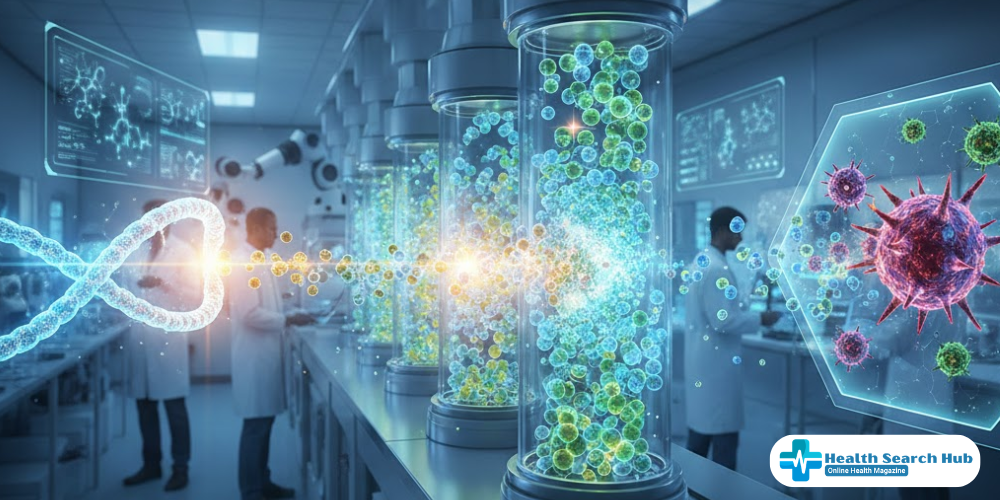
The method involves three carefully designed steps. First, the stem cells are expanded using a specialized feeder cell line called AFT024. Within just 14 days, this expansion phase achieves roughly 800-1,000-fold growth in cell numbers. Next, the expanded cells are co-cultured with a second feeder cell type called OP9. This step triggers the formation of artificial hematopoietic organoid aggregates, three-dimensional structures that guide the cells toward becoming committed NK cells. Finally, these committed cells undergo maturation and proliferation, resulting in highly pure populations of induced NK cells that express CD16, a surface marker associated with effective tumor-killing activity.
The efficiency gains are remarkable. From a single starting stem cell, the method produces up to 14 million induced NK cells or approximately 7.6 million CAR-engineered induced NK cells. The team estimates that just one-fifth of a standard cord blood unit could yield enough allogeneic natural killer cells for thousands, or even tens of thousands, of therapeutic doses.
A Dramatic Reduction in Manufacturing Costs
One of the most significant practical advantages of this approach is the dramatic reduction in the viral vector required for genetic modification. In conventional CAR NK cell therapy manufacturing, large quantities of viral vectors are needed to introduce the chimeric antigen receptor into mature NK cells. Viral vector production is one of the most expensive components of cellular therapy manufacturing.

By shifting CAR engineering to an earlier stem cell stage, the researchers found that their method requires only about 1/140,000 to 1/600,000 of the viral vector typically used. This reduction alone could lower the cost of CAR NK cell therapy by orders of magnitude, addressing one of the most persistent barriers to making cellular immunotherapy widely available.
The resulting NK cell products also showed zero T-cell contamination, an important safety consideration. T-cell contamination in allogeneic NK cell therapies can lead to graft-versus-host disease, a potentially life-threatening complication where donated immune cells attack the recipient’s healthy tissue.
Evidence of Anti-Tumor Effectiveness
Manufacturing efficiency means little if the resulting cells cannot fight cancer effectively. The researchers tested their induced NK cells and CAR-engineered NK cells against various human cancer cells in laboratory settings. Both types demonstrated strong tumor-killing ability.
In animal models, the results were equally encouraging. Mice bearing human B-cell acute lymphoblastic leukemia that received CD19 CAR-engineered NK cells showed significant reductions in tumor growth and extended survival compared to control groups. Importantly, both fresh and previously frozen cells maintained their anti-tumor activity, suggesting that these NK cell products can be manufactured in advance, stored, and shipped to treatment centers as needed, much like a conventional pharmaceutical product.
What Comes Next for NK Cell Therapy
Despite the promise of these findings, important questions remain. The study’s results are based on laboratory experiments and animal models. Clinical trial testing in human patients will be essential to confirm that these cells are safe, effective, and durable in the complex environment of the human body. Mouse models, while valuable, cannot fully predict how long CAR NK cells will persist in patients or how effectively they will navigate the immunosuppressive tumor microenvironment that cancers create to protect themselves.
The broader field of NK cell therapy is already generating encouraging clinical data. Multiple clinical trials evaluating allogeneic NK cell and CAR NK cell products are underway at institutions, including MD Anderson Cancer Center. Early results from these trials have shown response rates of 50-80% in certain blood cancers, with safety profiles that compare favorably with those of existing CAR T cell therapy options. The National Cancer Institute continues to support research into natural killer cell therapies as a key component of the next generation of cancer immunotherapy.
A Step Toward Affordable, Scalable Immunotherapy
The idea that a single cell, taken from umbilical cord blood that would otherwise be discarded, can multiply into millions of cancer-fighting immune cells represents a meaningful shift in what is possible. This research does not claim to have cured cancer, and the road from laboratory success to approved treatment is long. But it addresses some of the most fundamental obstacles that have limited the reach of cellular immunotherapy: cost, scalability, and manufacturing complexity.
If future clinical trials confirm what the laboratory and animal data suggest, this method could help transform NK cell therapy from a specialized treatment available to relatively few patients into a widely accessible cancer treatment option. For the millions of people around the world living with cancer, that possibility represents real and tangible progress.
Positive Takeaway
The ability to produce millions of potent, cancer-fighting immune cells from a single stem cell is exactly the kind of practical innovation that can bridge the gap between scientific discovery and patient care. By making NK cell therapy more affordable and scalable, this research brings the promise of advanced immunotherapy closer to the people who need it most, a reminder that some of the most important breakthroughs are not just about what science can do but about making it available to everyone.
Sources
- ScienceDaily: https://www.sciencedaily.com/releases/2026/02/260215225600.htm
- Earth.com: https://www.earth.com/news/chinese-scientists-create-scalable-method-for-cancer-fighting-cells/
- Published in Nature Biomedical Engineering (2026): https://www.nature.com/articles/s41551-025-01522-5
Disclaimer: This article is for informational purposes only and is based on publicly available research. It does not constitute medical advice. Always consult a qualified healthcare professional for medical guidance.