Every year, antibiotic-resistant bacteria claim more lives worldwide. According to global health estimates, drug-resistant infections are projected to contribute to millions of deaths annually if left unchecked. These so-called superbugs have evolved to survive the very medications designed to destroy them, leaving doctors and patients with fewer and fewer options. Now, a major CRISPR antibiotic resistance breakthrough may be changing the equation.
For decades, the medical community has sounded the alarm about this growing crisis. Hospitals have become battlegrounds where once-treatable infections turn dangerous, and common procedures carry increasing risk. The need for new approaches has never been more urgent, and CRISPR-based solutions targeting antibiotic resistance genes are among the most promising answers.
Now, a team of scientists at the University of California, San Diego has introduced a promising new weapon in this fight. Using next-generation CRISPR technology, they have developed a tool that can specifically target and disable genes that confer antibiotic resistance in bacteria. Published in npj Antimicrobials and Resistance in February 2026, this research represents a meaningful step forward in the battle against superbugs.
What Are Superbugs and Why Are They Dangerous?
Bacteria are remarkably adaptable organisms. When repeatedly exposed to antibiotics, some bacteria develop genetic mutations or acquire resistance genes from other microbes, allowing them to survive treatment. Over time, these antibiotic-resistant bacteria multiply and spread, creating populations that no longer respond to standard medications.
Some of the most well-known superbugs include MRSA (methicillin-resistant Staphylococcus aureus), which can cause severe skin and bloodstream infections, and Clostridioides difficile (C. diff), which leads to dangerous intestinal inflammation. Carbapenem-resistant Enterobacteriaceae (CRE) have been called a nightmare bacteria by health agencies because they resist even the strongest available antibiotics.
The challenge is compounded by the fact that developing new antibiotics is a slow, expensive process. Pharmaceutical companies have struggled to keep pace with the speed of bacterial evolution. This is why alternative approaches, like the one developed at UC San Diego, are generating so much excitement in the scientific community.
How the New CRISPR Tool Works
CRISPR, which stands for Clustered Regularly Interspaced Short Palindromic Repeats, is a gene-editing technology that allows scientists to make precise changes to DNA. Think of it as a pair of molecular scissors that can find a specific sequence in a strand of DNA and cut it. Originally discovered as a natural defense system that bacteria use against viruses, CRISPR has been adapted by researchers into one of the most versatile tools in modern biology.
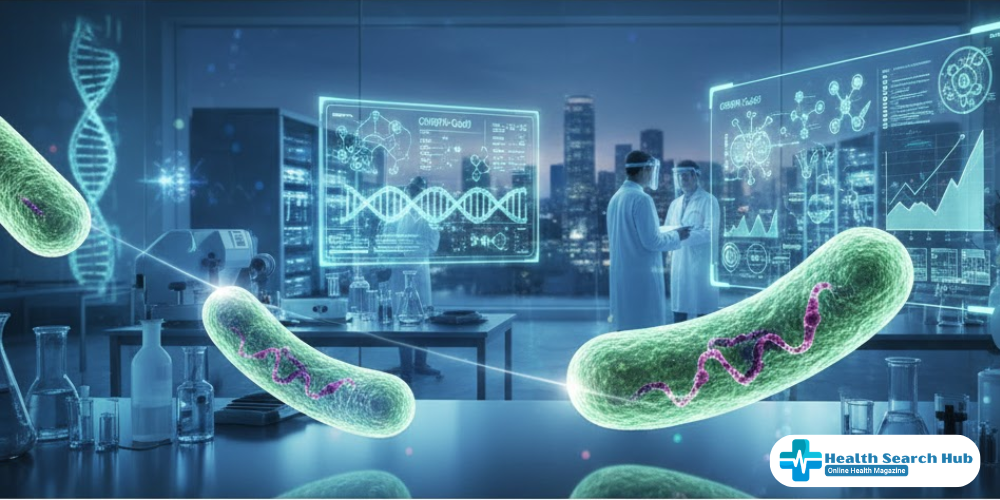
The UC San Diego team took this technology a step further. Rather than editing human genes, they designed their CRISPR system to target the specific resistance genes inside bacteria. When the tool identifies these genes, it effectively disables them, rendering the bacteria unable to withstand antibiotics. Once the resistance is removed, conventional antibiotics can resume their effectiveness.
What makes this approach particularly clever is its precision. Unlike broad-spectrum antibiotics that kill both harmful and beneficial bacteria, this CRISPR-based tool for antibiotic resistance targets the resistance mechanism itself. This targeted approach could help preserve healthy bacteria in a patient’s body while neutralizing dangerous bacteria, a significant advantage over traditional treatments.
The researchers also engineered the system to be delivered efficiently to bacterial cells, addressing one of the longstanding challenges in applying CRISPR to infectious diseases. Early laboratory results indicate the tool is effective against multiple types of resistant bacteria, suggesting broad potential applications.
What This Means for the Future of Medicine
While this research is still in its early stages, the implications are significant. If CRISPR-based tools like this one can be refined and scaled for clinical use, they could transform how hospitals manage drug-resistant infections. Instead of relying solely on finding new antibiotics, a race that bacteria seem to be winning, doctors could use gene-editing technology to make existing antibiotics effective again.
This approach also aligns with the broader movement toward precision medicine, in which treatments are tailored to the specific biology of each condition rather than a one-size-fits-all approach. By targeting the specific genetic mechanism of resistance, CRISPR tools could reduce side effects, shorten recovery times, and lower the risk of creating new resistant strains.
The research team has noted that further development is needed, including safety testing and clinical trials, before this technology can be used in real-world medical settings. However, the foundation they have laid is strong, and the scientific community has responded with considerable interest.
It is worth noting that CRISPR technology has already shown promise in treating genetic diseases, cancer, and viral infections. Adding antibiotic resistance to that list underscores the remarkable versatility of this tool and the creativity of the scientists working with it.
A Hopeful Direction for Global Health
The fight against antibiotic resistance is one of the defining health challenges of our time. It touches every country, every hospital, and every community. For years, the conversation has been dominated by warnings about what we stand to lose if resistance continues unchecked.
This CRISPR breakthrough offers something different: a reason for optimism. It demonstrates that human creativity and scientific collaboration can rise to meet even the most daunting challenges. The researchers at UC San Diego have shown that instead of simply trying to outrun bacteria with new drugs, we can outsmart them by targeting the very genes that make them dangerous.
As this technology continues to develop, it joins a growing arsenal of innovative approaches that are reshaping how we think about infectious diseases. From phage therapy to vaccine development to gene editing, the tools available to medicine are expanding in exciting ways.

The road from laboratory discovery to patient care is long, but every journey starts with a first step. This CRISPR tool represents a meaningful step forward, and it is a reminder that, even against the toughest opponents, science continues to find new paths forward.
Positive Takeaway
Science is rising to meet one of our greatest health challenges. This CRISPR breakthrough shows that human ingenuity and collaboration can stay ahead of even the toughest superbugs, giving us real hope for a safer, healthier future. The same creativity that gave us antibiotics in the first place is now being applied in entirely new ways to protect them for generations to come.
Sources
- UC San Diego Today: https://today.ucsd.edu/story/next-generation-genetics-technology-developed-to-counter-the-rise-of-antibiotic-resistance
- ScienceDaily: https://www.sciencedaily.com/releases/2026/02/260217005717.htm
- npj Antimicrobials and Resistance (Nature): https://www.nature.com/npjantimicrobials/
Disclaimer: This article is for informational purposes only and is based on publicly available research. It does not constitute medical advice. Always consult a qualified healthcare professional for medical guidance.